Tested motors
STEPFOC works with bipolar (4-wire) stepper motors whose phase resistance is 1 to 5 Ω and whose rated current is
3 A or less. The motors below have been run on it; the resistance and inductance are the datasheet values of one
coil, which is what you enter with #R and #L before calibration.
| Motor | Frame | Pole pairs | Phase resistance | Phase inductance | Rated current | Mass | ||
|---|---|---|---|---|---|---|---|---|
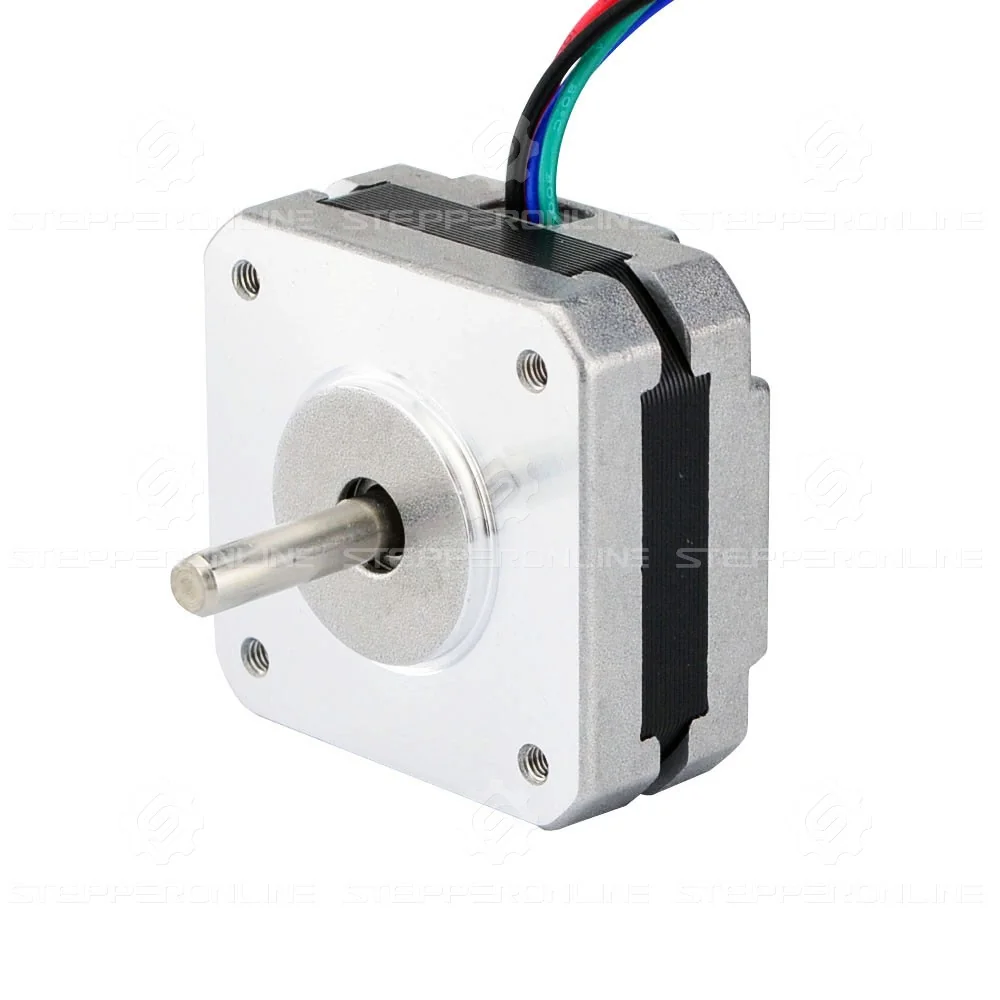 |
17HS08-1004S | NEMA 17, 20 mm | 50 | 3.7 Ω | 4.5 mH | 1.0 A | 140 g | Stepperonline |
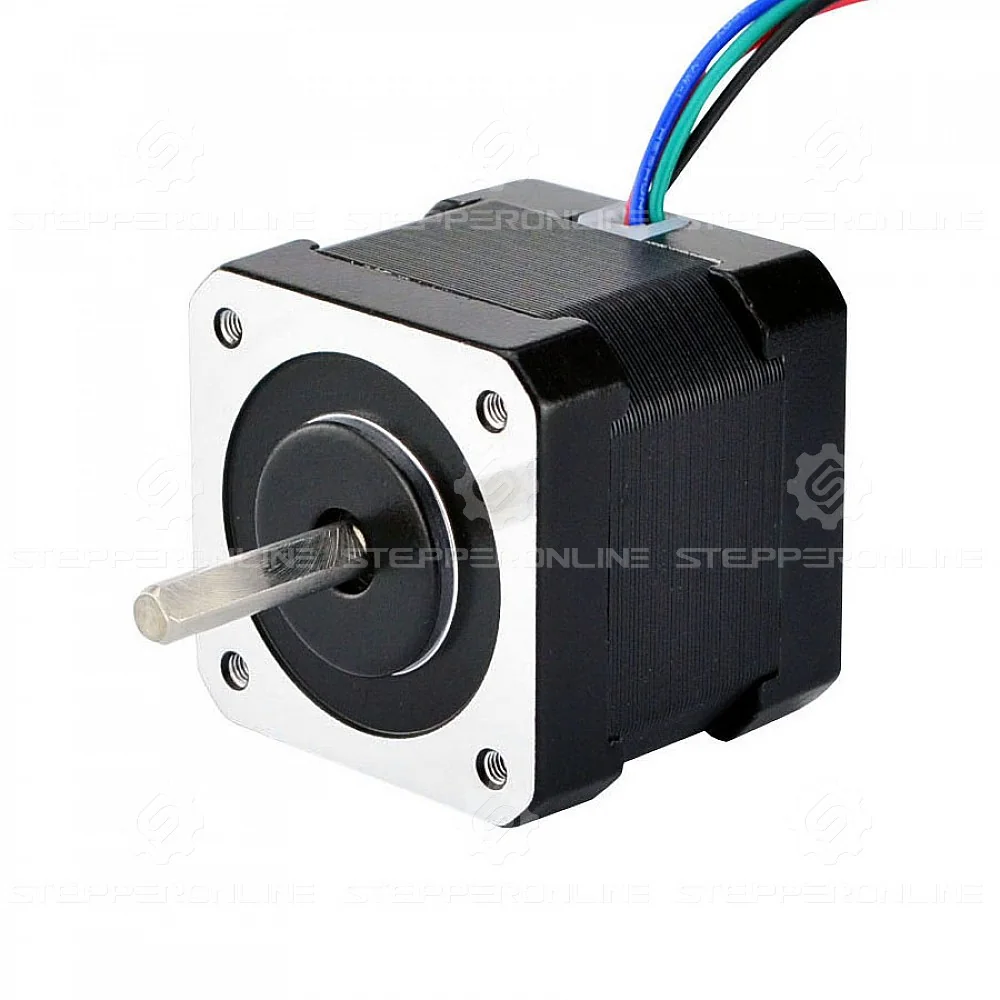 |
17HS16-2004S1 | NEMA 17, 40 mm | 50 | 1.1 Ω | 2.6 mH | 2.0 A | 310 g | Stepperonline |
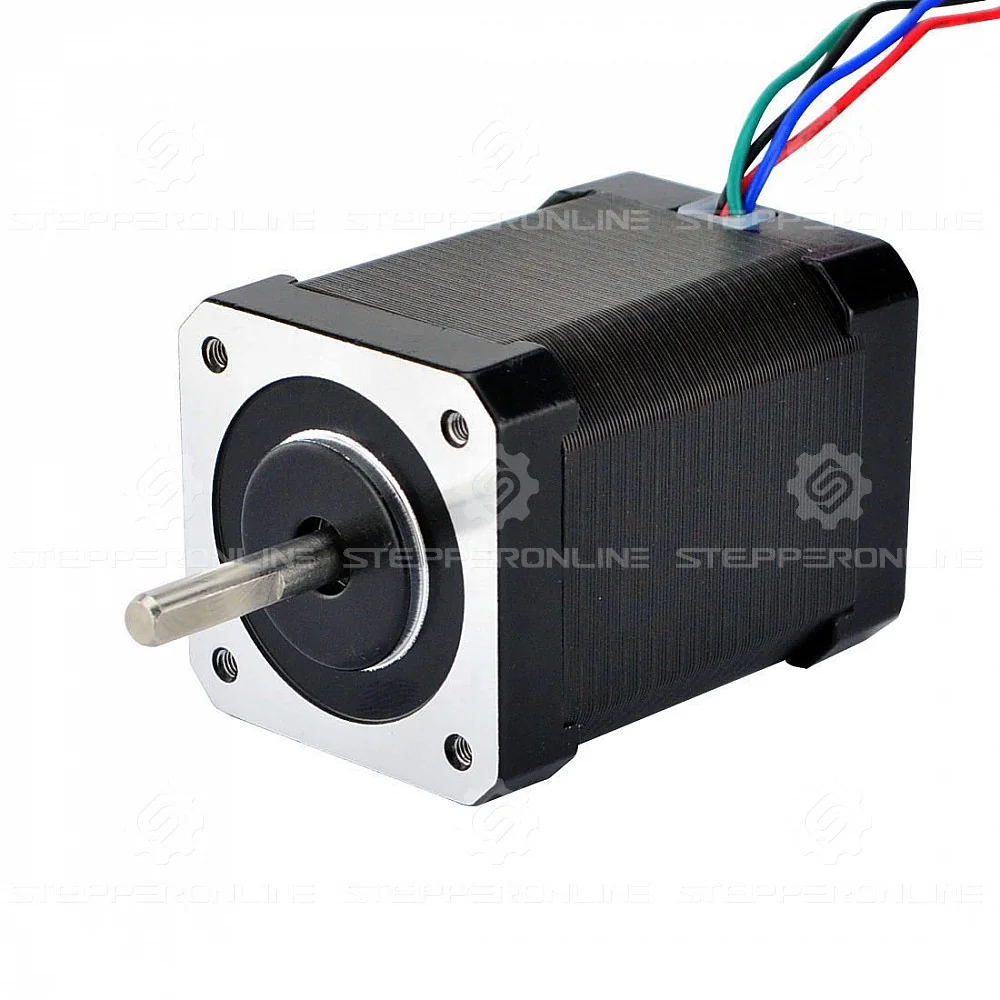 |
17HS24-2104S | NEMA 17, 60 mm | 50 | 1.6 Ω | 3.0 mH | 2.1 A | 500 g | Stepperonline |
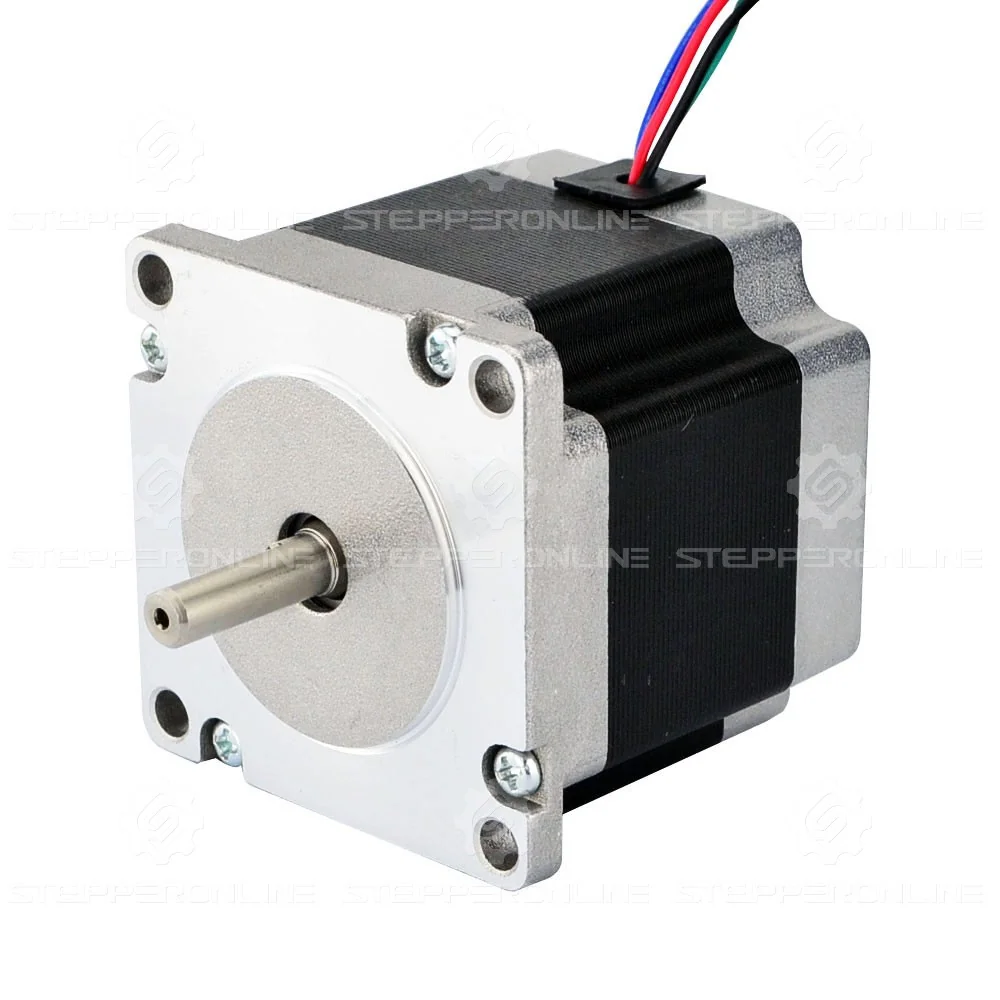 |
23HM22-2804S | NEMA 23, 56 mm, 0.9° | 100 | 1.16 Ω | 4.2 mH | 2.8 A | 700 g | Stepperonline |
After calibration, and before the first test, set the current limit to the motor's rated current with #Ilim:
calibration leaves it at 1600 mA (1700 mA after #Default), more than the 17HS08's rating. See
Current limit and loop tuning.
Choosing a motor
A lower phase resistance and inductance give a higher speed at a given supply voltage; the velocity constant
KV that calibration finds tells how fast the motor can turn: roughly 0.8 × V × KV revolutions per minute,
where V is the voltage limit #Vlim (6 V by default) or the supply voltage, whichever is lower.
Motors with visibly uneven windings or a resistance that differs between the two coils calibrate badly.
Comments
Found a mistake on this page? Edit it on GitHub · Report it · Get help · This page as Markdown · llms.txt · The whole manual as PDF